 Dec 19 2025
 3D printing in neurosurgery
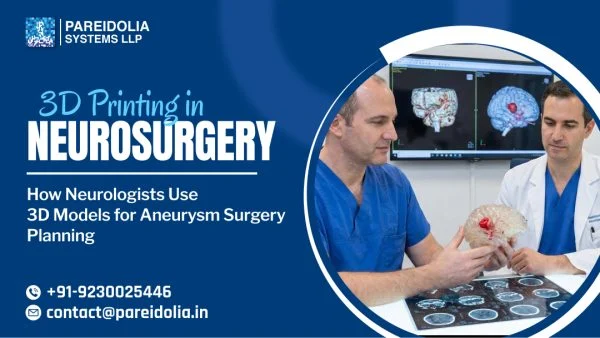
3D Printing in Neurosurgery: How Neurologists Use 3D Models for Aneurysm Surgery Planning
As artificial intelligence continues to reshape the healthcare ecosystem, one area seeing rapid advancement is 3D printing in neurosurgery—particularly for aneurysm surgery planning. By combining AI-driven medical imaging, advanced data processing, and patient-specific 3D modeling, healthcare-focused AI companies are enabling clinicians to move from diagnosis to decision-making with greater accuracy and confidence.
Among cerebrovascular procedures, aneurysm treatment remains one of the most technically demanding. Subtle variations in vascular anatomy can significantly influence surgical outcomes. This is where AI-assisted 3D modeling and printing play a crucial role.
Why Is Cerebral Aneurysm Surgery Planning So Complex?
A cerebral aneurysm is a localized dilation of a blood vessel in the brain, often occurring at arterial bifurcations. Each aneurysm is unique in terms of:
- Shape and orientation.
- Neck width and dome size.
- Relationship to surrounding vessels.
- Risk of rupture.
While CT angiography (CTA), MR angiography (MRA), and digital subtraction angiography (DSA) provide detailed imaging, achieving an intuitive and fully accurate 3D understanding of complex vascular anatomy still requires significant interpretation, understanding remains challenging—even for experienced neurologists and neurosurgeons. For AI companies supporting healthcare, this gap between imaging and actionable insight presents a major opportunity.
The Role of AI in 3D Printing for Neurosurgery:
3D printing in neurosurgery relies heavily on AI-enabled processes. AI algorithms assist in:
- Image segmentation of blood vessels and aneurysms.
- Noise reduction and anatomical refinement.
- Automated detection of aneurysm boundaries.
- Rapid conversion of imaging data into 3D-ready formats.
This data is transformed into patient-specific 3D models that can be physically printed with high anatomical fidelity. For AI companies, these workflows demonstrate how machine intelligence can directly enhance clinical precision rather than merely automate reporting.
How are 3D models used in Aneurysm Surgery Planning?
1. Improved Anatomical Understanding
Physical 3D printed aneurysm models allow neurologists and neurosurgeons to examine vascular anatomy in real space. Unlike flat screens, these models provide:
- True spatial depth.
- Accurate vessel angulation.
- Clear visualization of overlapping structures.
This is particularly valuable for complex aneurysms located in areas such as the anterior communicating artery or middle cerebral artery.
2. Preoperative Decision Support
AI-assisted aneurysm surgery planning benefits significantly from tangible models. Surgeons can evaluate:
- Optimal surgical approach.
- Feasibility of clipping versus endovascular treatment.
- Clip size, orientation, and placement strategy.
For AI companies, this highlights how decision-support technologies extend beyond dashboards into physical tools that influence real surgical outcomes.
3. Simulation and Risk Reduction
3D models for neurosurgeons are increasingly used for procedural simulation. Surgeons can rehearse steps, anticipate complications, and adjust strategies before operating on the patient.
This approach contributes to:
- Reduced intraoperative uncertainty.
- Shorter surgical times.
- Lower risk of vessel damage.
For neuro AI model developers, this reinforces the value of combining predictive analytics with hands-on simulation tools.
4. Multidisciplinary Collaboration
Modern aneurysm treatment often involves neurologists, neurosurgeons, interventional radiologists, and anesthesiology teams. Patient-specific 3D models act as a shared reference point. Instead of interpreting scans individually, teams can align visually and strategically, improving coordination and clinical decision-making—an outcome AI platforms increasingly aim to support.
5. Patient Education and Engagement
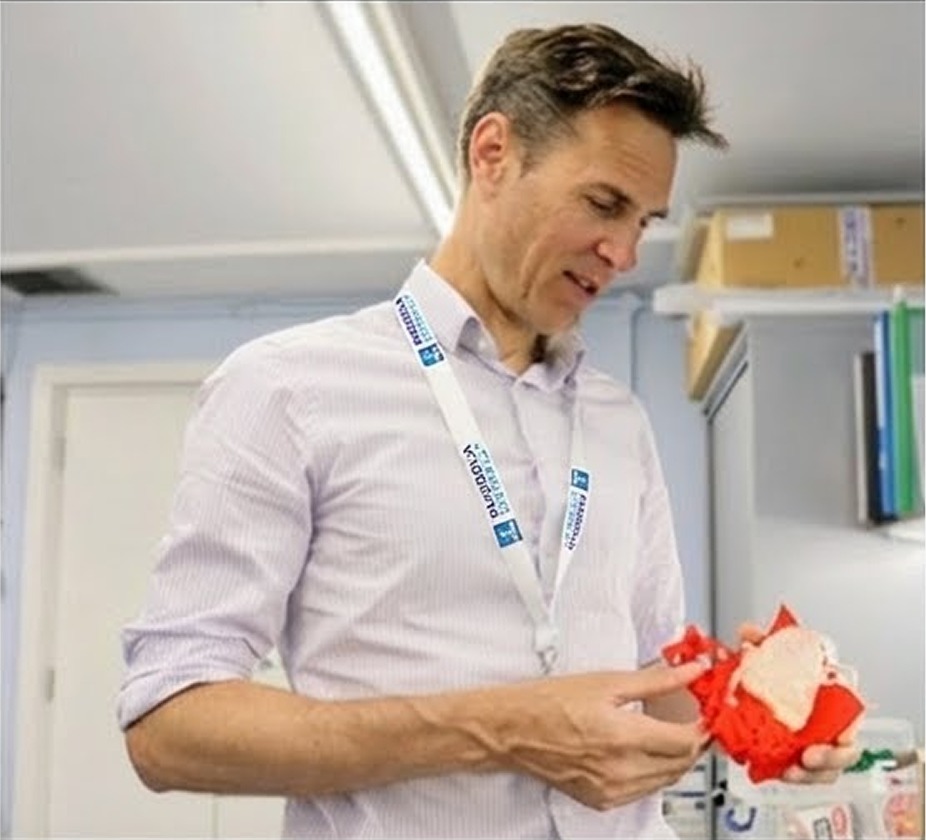
3D printed models also play an important role in patient communication. AI-generated, patient-specific anatomy helps clinicians explain:
- The nature of the aneurysm.
- Proposed treatment plans.
- Associated risks and benefits.
For healthcare AI companies focused on patient experience, this demonstrates how explainability can extend beyond software interfaces.
The Role of Pareidolia Systems in the AI-Driven Healthcare System:
Within this evolving landscape, Pareidolia Systems plays a critical role by translating AI-processed medical data into clinically accurate physical 3D models.
Pareidolia Systems supports AI-enabled healthcare solutions by:
- Converting precisely segmented imaging data into high-fidelity 3D printable models.
- Ensuring anatomical accuracy for cerebrovascular structures.
- Supporting preoperative planning, simulation, and education.
- Bridging the gap between digital intelligence and physical clinical tools.
Rather than replacing AI platforms, Pareidolia complements them—acting as the final step that brings data-driven insights into the hands of clinicians.
Why Does This Matter for AI Companies in Healthcare?
For AI companies focused on medical imaging, diagnostics, or surgical planning, 3D printing in neurosurgery represents a natural extension of digital innovation.
Key takeaways for AI-driven healthcare organizations:
- AI segmentation gains real-world impact when paired with physical models.
- Decision support improves when clinicians can interact with anatomy tangibly.
- Patient-specific modeling enhances both clinical accuracy and trust.
- Hybrid digital-physical workflows represent the future of precision medicine.
Aneurysm surgery planning is just one example—but it clearly demonstrates how AI can move beyond analytics into actionable, patient-centric care.
The Future of AI-Enabled 3D Printing in Neurosurgery:
As AI models become more advanced, future developments may include:
- Automated end-to-end aneurysm model generation.
- AI-guided surgical simulations using flexible materials.
- Integration with AR/VR for hybrid planning environments.
- Predictive modeling of aneurysm rupture risk combined with physical replicas.
3D printing in neurosurgery represents a powerful intersection of AI, medical imaging, and clinical practice. In aneurysm surgery planning, patient-specific 3D models provide clarity, reduce risk, and enhance collaboration—delivering measurable value to both clinicians and patients.
For AI companies supporting the healthcare sector, this approach highlights a critical insight: the future of medical AI lies not only in algorithms, but in how those algorithms manifest in real-world clinical environments. Through its expertise in medical 3D modeling, Pareidolia Systems plays a key role in making that future possible.