Oct 7 2025
 AI in Breast Cancer Screening
How AI Improves Lesion Detection in Dense Breast Tissue with Accurate Annotation
Breast cancer remains one of the most common cancers among women worldwide. Early detection is critical, as it dramatically improves treatment outcomes and survival rates. Traditional breast cancer screening methods like mammography have saved millions of lives, yet challenges still persist—especially in women with dense breast tissue.
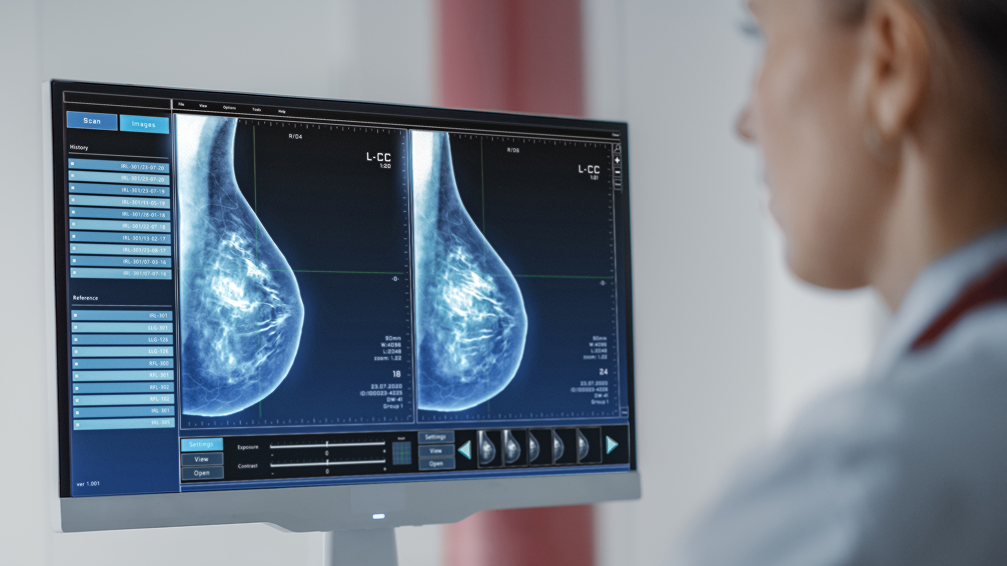
Dense breast tissue appears hyperdense on a mammogram, just like cancerous lesions. This similarity makes it harder for radiologists to detect tumors accurately, sometimes leading to false negatives (missed cancers) or false positives (unnecessary biopsies). As a result, many women seek supplemental screening such as genetic testing for breast cancer, ultrasounds, or MRIs.
But a powerful new ally is transforming the way radiologists read mammograms: Artificial Intelligence (AI) combined with accurate data annotation. Pareidolia Systems LLP, specializing in AI innovation, end-to-end data annotation, machine learning, and healthcare software development, is helping shape this transformation.
In this blog, we’ll explore how AI improves lesion detection in dense breast tissue and why accurate annotation is essential for paving the way for safer, smarter breast cancer screening.
Why Dense Breast Tissue Complicates Mammogram Screening?
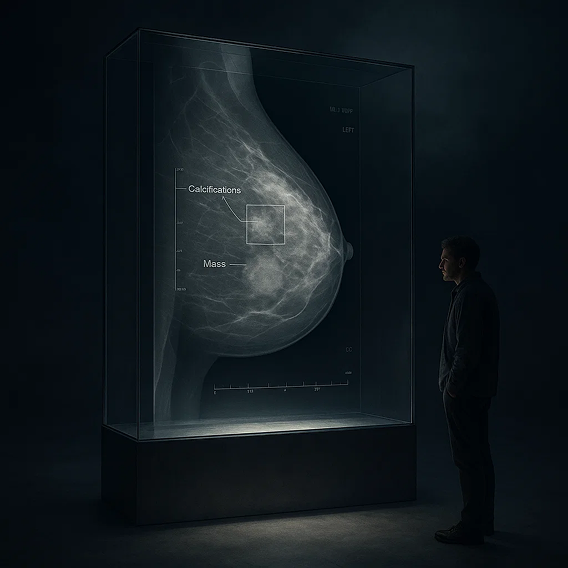
A mammogram screening uses low-dose X-rays to capture images of the breast. Radiologists look for lesions such as:
- Masses (lumps or tumors)
- Calcifications (tiny deposits of calcium)
- Architectural distortions (unusual structures in tissue)
However, in women with dense breast tissue:
- Both normal tissue and tumors appear hyperdense, reducing visibility.
- Small lesions are often hidden behind dense areas.
- The risk of breast cancer is already higher in women with dense breasts.
Accurate annotation plays a vital role in developing robust AI models for mammogram analysis. By precisely labeling minute lesions and complex tissue patterns, AI systems learn to detect subtle abnormalities that the human eye might miss—especially in dense breast tissue. This reduces diagnostic errors and shortens the time radiologists spend interpreting results. AI-powered annotation ensures that even the smallest pathologies are identified early, improving diagnostic accuracy and supporting better patient outcomes.
AI offers a game-changing solution—helping radiologists see what the human eye might miss.
The Role of AI in Breast Cancer Screening
Artificial Intelligence systems trained on thousands of mammograms can:
- Enhance Accuracy in Mammogram Interpretation: AI tools can highlight suspicious regions in dense tissue.
- Detect Hidden Lesions: Algorithms can spot subtle patterns invisible to radiologists.
- Reduce False Negatives: Ensures fewer cancers go undetected.
- Reduce False Positives: Helps avoid unnecessary stress, tests, and costs.
- Support Radiologists, Not Replace Them: AI acts as a second reader, giving radiologists more confidence in diagnosis.
Recent studies show that AI-assisted readings can improve accuracy in dense breasts by over 20%. This doesn’t just improve detection rates; it saves lives.
Why Accurate Annotation Matters in AI Mammography?
AI is only as good as the data it is trained on. Here’s where Pareidolia Systems LLP plays a critical role.
To train an AI model for lesion detection:
- Thousands of mammograms must be precisely annotated (labeled by experts).
- Each lesion must be precisely marked: benign or malignant, calcification or mass, with clear boundaries defined.
- Annotations must be consistent across datasets to avoid bias.
Accurate annotation = smarter AI.
If annotations are poor or inconsistent, AI may misinterpret data, leading to unreliable predictions. Pareidolia specializes in:
- Data Annotation: Our experts carefully label medical images for AI training.
- Segmentation & 3D Modeling: Identifying lesion boundaries in 2D/3D.
- Machine Learning Model Creation: Developing AI that can analyze complex medical data.
- Healthcare-Focused Software Development: Creating tools that hospitals and clinics can implement seamlessly.
This ensures that AI models used in breast cancer screening become more reliable and clinically valuable.
Genetic Testing & AI: A Holistic Approach
While AI enhances imaging, genetic testing for breast cancer helps identify women at higher risk (e.g., BRCA1/BRCA2 mutations). Combining genetic testing with AI-based imaging offers a dual advantage:
- Genetic tests reveal predisposition.
- AI improves detection during screenings.
This holistic strategy ensures that women with high risk and dense breast tissue get the best possible care.
Diagnostic Mammogram & AI Support
When a standard mammogram finds something suspicious, women often undergo a diagnostic mammogram—a more detailed scan with different angles. AI support during diagnostic mammograms helps radiologists:
- Prioritize cases with high cancer probability.
- Detect smaller, earlier-stage lesions.
- Provide faster results, reducing patient anxiety.
By assisting radiologists in mammogram interpretation, AI shortens the time between detection and treatment.
Benefits of AI in Mammogram Screening for Patients
For patients, the advantages are clear:
- More Accurate Results: Lower chance of missed cancers.
- Faster Diagnoses: Reduced waiting times for results.
- Less Anxiety: Fewer false alarms.
- Personalized Care: Integration with genetic testing for tailored screening plans.
- Accessible Solutions: With AI tools becoming more affordable, clinics worldwide can improve care.
How Pareidolia Systems LLP Contributes
At Pareidolia Systems LLP, we believe in empowering healthcare with the power of data. Our services directly align with advancing breast cancer screening:
- End-to-End Data Annotation: Creating highly accurate training datasets for AI mammography.
- Segmentation & 3D Modeling: Essential for identifying lesion shapes and sizes in mammograms.
- AI/ML Model Development: Custom models tailored for medical imaging.
- Clinical Software Integration: Helping hospitals adopt AI tools without disrupting workflows.
By handling the complexity of annotation and AI development, we enable researchers, startups, and healthcare providers to innovate and save lives.
The Future of Breast Cancer Screening
In the next decade, breast cancer detection will look very different:
- AI will be integrated into every mammogram screening.
- Genetic testing will be standard for at-risk women.
- Cloud-based AI systems will allow instant “second reads” anywhere in the world.
- Patients may receive results within minutes of their scan.
- Multi-modal AI will combine mammography, MRI, ultrasound, and genetic data for holistic screening.
Pareidolia Systems LLP is leading the way by providing high-quality annotated datasets that are crucial for advancing AI in healthcare.
Breast cancer screening has saved countless lives, but dense breast tissue continues to make lesion detection a challenge. With the rise of AI and accurate annotation, however, this challenge is being overcome. From improving mammogram screening accuracy to enhancing diagnostic mammogram interpretation and integrating with genetic testing for breast cancer, AI is revolutionizing the landscape.
At Pareidolia Systems LLP, we are committed to empowering this transformation—providing the precise annotation, segmentation, and AI model development that healthcare innovators need.
The message is clear: AI is not replacing radiologists—it’s empowering them. And with accurate annotation and reliable data powering these systems, the future of breast cancer screening looks brighter, faster, and more accurate than ever before.