 Feb 8 2025
 AI-Powered Health Data Collection
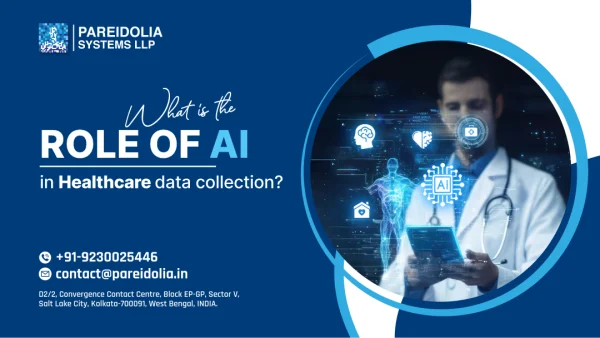
What is the role of AI in healthcare data collection?
AI is revolutionizing the healthcare industry by providing innovative solutions and enhancing the process of collecting data that is both effective and efficient. AI in Healthcare Data Collection is Changing the way we think about medicine, from gathering patient information to predicting health outcomes.
Automated Data Collection in Healthcare has Become a trend Nowadays for its Efficiency & Time-Saving Qualities.
In this article, We Explore what healthcare data collection is, how AI fits in, and the challenges and ethical implications of its use.
What is Meant By “Data Collection” in Healthcare?
In the healthcare industry, data collection means: collecting data about patients systematically. These include medical history, test results, treatment plans, and progress on ongoing care. Medical Data Collection is fundamental for decision-making based on it — for clinicians and researchers.
Types of Data Collected in Healthcare:
- Past illnesses and surgeries and other medical history of the patient.
- Diagnostic tests, including lab tests, imaging scans, and biopsies.
- You are an expert in treatment plans, prescriptions, and medication history.
- Health, lifestyle, such as diet habits, exercise, and sleep.
- Genetic and genomic data for personalized medicine.
With advancements like AI-Powered Health Data Collection, these tasks are being Easier, Accurate & Time Saving.
Understanding AI and Its Applications in Healthcare Data Collection
What is AI in Healthcare?
Artificial Intelligence (AI): The capability of a machine to imitate human behavior. The potential in patient monitoring, diagnosis, and treatment planning has been unlocked through its integration into healthcare.
Machine Learning for Medical Data Collection
Machine learning (ML), a category of AI, is a method for teaching algorithms to recognize patterns in data. This allows for the most timely and accurate data capture of real-time patient information, an important supervisor of Automated Data Collection in Healthcare.
Deep Learning in Data Analysis
Deep learning, a subset of AI, takes it a step further by imitating the neural networks seen within the human brain. It does great with complex datasets like imaging scans and genetics data.
Examples of AI Applications in Healthcare Data
- Chatbots for patient interaction powered by AI.
- Some wearables read vitals and send the data to healthcare providers.
- Predictive analytics tools that find risks in health.
Such innovations are evidence of the important role of AI in Patient Data Acquisition today and its potential to improve decision-making throughout healthcare systems.
Why Is It Important to Use AI in Healthcare Data Collection?
AI has become one of the Major parts of healthcare data collection due to the challenges of handling vast amounts of information. Here’s why:
1. Ensuring Data Quality
- Artificial intelligence assists in overcoming barriers related to inconsistencies in the collection of data to help make sure that medical datasets are reliable or not.
- Machine learning-based artificial intelligence systems are only as good as the data that are fed into them.
2. Standardizing Health Data Formats
- Thousands of home healthcare devices and medical machines to standardize what health looks like in touch with AI.
- Standardization increases collaboration as well as data sharing across providers and positively impacts patient outcomes.
3. Managing Large-Scale Data Efficiently
- The healthcare sector produces enormous amounts of data every day, such as patient records, imaging scans, and clinical trial results.
- AI allows this massive amount of data to be processed, categorized and analyzed — saving time and resources while yielding critical insights.
Enabling standardization improving data quality and improving Data Collection with AI in Healthcare is a tenet of modern medicine.
How Does AI Work in the Data Collection Process?
1. Leveraging Electronic Health Records (EHRs)
EHRs contain a wealth of patient data, and AI is capable of analyzing this data to detect trends, predict risks, and suggest interventions. Such examples indicate how AI in Healthcare Data Collection enables better utilization of the healthcare system.
2. Predictive Analytics for Patient Care Management
Predictive analytics powered by AI use historical data to predict potential health problems. Using these tools, providers can develop tailored care plans that lead to better patient outcomes.
3. Real-Time Data Gathering with IoT Devices
Internet of Things (IoT) devices are used to gather real-time health data, including smartwatches and glucose monitors. Thus, it helps proactive monitoring along with timely intervention powered by AI Tools for Medical Data Gathering.
Challenges of Using AI in Healthcare Data Collection
While AI offers various advantages, It faces several challenges during execution:
1. Data Privacy and Security
- Also, cyber security is essential because of the nature of medical data.
- However, AI systems also need to act under data protection regulations to protect industry patient privacy.
2. Bias in AI Algorithms
- However, AI algorithms may inherit biases present in the training data, leading to disparities in healthcare delivery.
- To my mind, there are improvements to algorithms when they are trained on diverse datasets representative of the real world.
These issues must be addressed for the successful integration of AI in Medical Data Collection into the healthcare ecosystem.
Analyzing Real-World Evidence with AI: Beyond Clinical Trials
1. Importance of Real-World Data
Long-term clinical effects are better revealed through real-world data, for instance, objective measure outcomes that are reported by patients and wearable analytics. This is data that AI can process, making it essential to post-market surveillance activities.
2. Challenges with Observational Datasets
- Causal inference in observational settings is hindered by unstructured and incomplete datasets.
- To address these limitations AI tools are rapidly developing, becoming an even bigger part of AI & Big Data In Medicine.
Addressing Ethical Considerations: Ensuring Responsible Use of AI Technologies
- All AI algorithms should be transparent to gain trust and accountability.
- Implement Professional Liability Research Standards (PLRS) which include data collection measures and the underlying data protection policies.
- Ensure equal access to AI-powered healthcare solutions for all demographics.
- Reduce biases in AI systems so that the bias does not result in inequitable delivery of health care.
- Ensure appropriate data protections are in place to safeguard patient privacy.
Future Trends of AI in Healthcare Data Collection
1. Integration of Genomics
Artificial Intelligence is helping to improve precision medicine By analyzing genetic data and allowing for personalized treatment.
2. Expansion of Telemedicine
Artificial Intelligence in Telemedicine — The increasing use of AI in telemedicine with Virtual healthcare (remote patient monitoring, remote diagnosis).
3. Collaborative AI Systems
These future applications will harmonize AI and healthcare professionals, reducing decision-making burdens while keeping the human touch.
These trends indicate the evolving Role of AI in Health Information Collection in the future of healthcare.
Conclusion
AI in Healthcare Data Collection has made the medical industry better prepared to tackle the obstacles posed by modern medicine, paving the way for a healthier tomorrow for both patients and providers. Looking forward, ethical considerations and real-world applications will continue to drive innovation, positioning AI squarely at the heart of healthcare. By the time the use of Artificial Intelligence in Medical Data Gathering is Improving & it has become a part of the Medical industry.