Sep 1 2025
 Medical Image Annotation
How Medical Data Annotation Companies Are Shaping the Future of AI in Healthcare
Artificial Intelligence (AI) is revolutionizing healthcare, transforming how medical professionals diagnose diseases, plan treatments, and improve patient outcomes. However, AI models can only be as effective as the data used to train them. This is where Pareidolia Systems LLP plays a critical role. By ensuring that medical data is precisely labeled and structured, these companies are powering next-generation healthcare solutions.
What is Medical Data Annotation?
Medical data annotation is the process of labeling and tagging medical images, patient records, and other healthcare data so AI and Machine Learning (ML) algorithms can interpret them accurately. This includes:
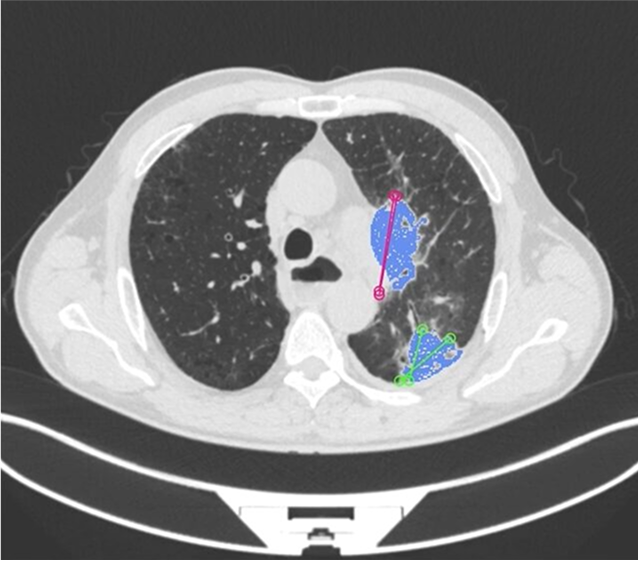
- Medical Image Annotation – Identifying regions of interest in X-rays, MRIs, CT scans, and ultrasound images.
- Precise segmentation – Demarcating abnormalities such as tumors, fractures, or lesions in radiological data.
At Pareidolia Systems LLP, we provide high-quality annotation services tailored to the healthcare industry, ensuring precision, compliance, and scalability.
Why Medical Data Annotation is Essential for AI in Healthcare
1. Improved Diagnostic Accuracy
AI models trained with well-annotated data can detect patterns that may be missed by the human eye. For example, annotated radiology images can help AI systems detect tumors or microfractures at an early stage.
2. Enhanced Treatment Planning
Accurate annotations enable AI to provide insights for personalized treatment plans, improving patient care and reducing errors.
3. Accelerated Medical Research
Researchers can develop and validate AI algorithms faster with access to large, annotated datasets. This speeds up innovation in disease detection and drug development.
4. Regulatory Compliance and Data Integrity
Healthcare AI solutions must comply with strict regulations. Proper annotation ensures data integrity and traceability, helping companies meet compliance requirements.
The Role of Pareidolia Systems LLP
At Pareidolia Systems LLP, we specialize in high-precision data annotation services designed for healthcare and AI applications. Our expertise includes:
- Medical Image Annotation – Detailed labeling of organs, tissues, and abnormalities for AI training.
- Segmentation & 3D Modeling – Advanced techniques to create accurate 3D representations for medical research and diagnostics.
- Quality control: Rigorous quality control measures ensure precise, consistent, and error-free annotations for reliable medical research and diagnostics.
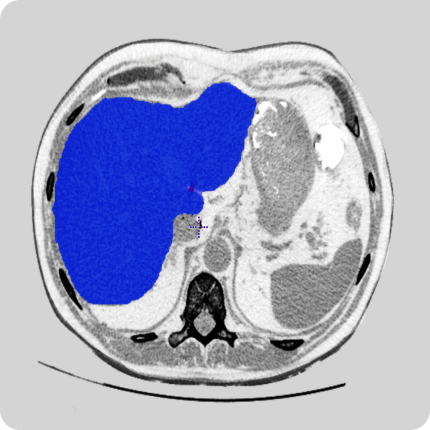
Pareidolia’s Medical Image Annotation Workflow
At the core of our annotation services is a commitment to clinical-grade precision and reproducibility. Each project follows a tightly controlled process to ensure that the final outputs meet the strictest standards — whether for diagnostic AI, clinical research, or regulatory submissions.
How We Ensure Annotation Accuracy
-
Project Onboarding
Understand dataset specifics, clinical use case, and annotation goals.
-
SOP Creation
Define detailed labeling guidelines, edge cases, and QA protocols with medical input.
-
Dataset Verification
Screen images for quality, format, and compliance with SOP criteria.
-
Annotation
Apply precise, modality-specific annotations using trained domain experts.
-
Multi-Level QA
- Level 1: Peer review for consistency and guideline adherence
- Level 2: Senior Medical imaging Specialist & radiologist review for clinical accuracy and completeness
- Feedback Loop: Corrections and SOP updates as needed
- Level 1: Peer review for consistency and guideline adherence
-
Ground Truth Finalization
Approve and export high-quality annotations in client-specified formats.
Applications of AI Enabled by Medical Data Annotation
1. Radiology and Imaging Diagnostics
AI can detect anomalies like lung infections, bone fractures, or neurological disorders faster and with high accuracy.
2. Oncology
AI models trained with annotated images help identify tumors, classify their stages, and track growth over time.
3. Cardiology
Medical image annotation helps AI systems identify heart defects, arterial blockages, and other cardiovascular conditions.
4. Drug Discovery
Annotated datasets allow AI models to analyze disease progression and predict how new drugs might interact with biological systems.
5. 3D printing
3D printing in healthcare uses patient-specific data to create accurate anatomical models, prosthetics, implants, and even bioprinted tissues. Annotated medical images help in designing customized surgical tools and guides, improving precision and reducing surgery time. It also aids in pre-surgical planning and medical training.
6. AR, VR & surgical navigation
Augmented Reality (AR) and Virtual Reality (VR) technologies allow surgeons to visualize complex anatomical structures in 3D before and during procedures. Surgical navigation systems, powered by annotated imaging data, provide real-time guidance for minimally invasive surgeries, reducing risk and improving patient outcomes. These technologies are also used for medical education and simulation-based training.
Future of AI in Healthcare with Data Annotation
The future of healthcare lies in precision medicine—where treatments are tailored to individual patients based on their genetic makeup and medical history. AI can only achieve this level of precision when trained on meticulously annotated data.
As AI adoption in healthcare grows, the demand for reliable medical data annotation will rise significantly. From automating diagnostic workflows to enabling predictive healthcare, the role of accurate annotation is indispensable.
Why Choose Pareidolia Systems LLP?
- Domain Expertise: Our team understands the complexity of healthcare data and the need for precise annotation.
- Advanced Tools & Techniques: We utilize cutting-edge tools for segmentation, 3D modeling, and annotation.
- Data Security & Compliance: Ensuring HIPAA and GDPR compliance for sensitive healthcare data.
- Scalability: Capable of handling large volumes of medical images and datasets efficiently.
The future of AI in healthcare depends on the quality of data it learns from—and medical data annotation companies are at the heart of this transformation. With its expertise in medical image annotation, radiology image annotation, and advanced segmentation techniques, Pareidolia Systems LLP is driving innovation in AI-powered healthcare solutions.