 Feb 7 2026
 Artificial Intelligence in Oncology
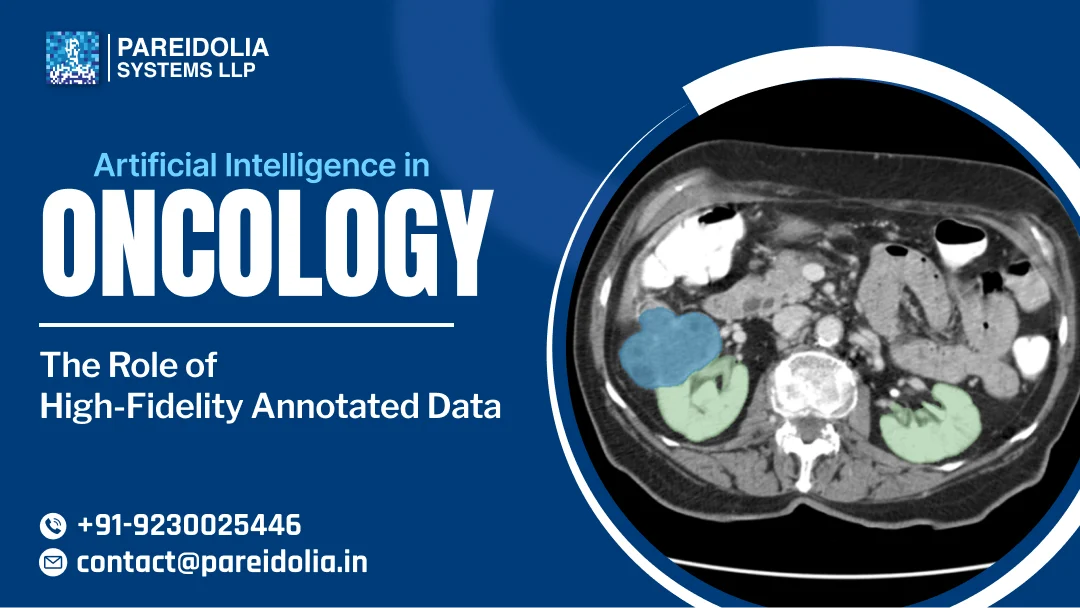
Artificial Intelligence in Oncology: The Role of High-Fidelity Annotated Data
Artificial intelligence in oncology is transforming how cancer is detected, diagnosed, and treated. From early-stage tumor detection to predictive treatment planning, AI-powered systems are now playing a critical role in modern cancer care.
However, the success of AI in cancer diagnosis does not begin with algorithms or models—it begins with data.
More specifically, it begins with high-fidelity annotated data.
Without accurate, clinically validated, and well-structured training data, even the most advanced AI models fail to deliver reliable outcomes. In oncology, where decisions directly impact patient lives, data quality is not optional—it is foundational.
This article explores how high-fidelity annotated data powers artificial intelligence in oncology, why it is essential for clinical-grade AI, and how specialized oncology data annotation services enable safer, more accurate cancer AI solutions.
Understanding Artificial Intelligence in Oncology
Artificial intelligence in oncology refers to the use of machine learning, deep learning, and computer vision technologies to assist in:
- Cancer detection and screening
- Medical imaging analysis (radiology, pathology, histopathology)
- Tumor classification and staging
- Treatment response prediction
- Personalized therapy planning
AI systems can process vast volumes of complex medical data—far beyond human capacity—helping clinicians identify subtle patterns that may otherwise go unnoticed.
Key Applications of AI in Oncology
- AI in cancer diagnosis using radiology and pathology images
- Automated tumor detection and segmentation
- Risk prediction and early screening models
- AI-assisted clinical decision support
- Precision oncology and personalized treatment
Despite these advancements, the effectiveness of AI models depends almost entirely on the quality of the data they are trained on.
Why does Quality of Annotated Data Matter in Oncology AI?
In healthcare, poorly annotated data leads to inaccurate predictions. In oncology, it can lead to misdiagnosis, delayed treatment, or inappropriate therapy decisions.
AI models are only as good as the data used to train them.
Common Challenges with Low-Quality Oncology Data
- Inconsistent labeling of tumors and lesions.
- Annotation errors due to lack of clinical expertise.
- Biased datasets that do not represent diverse populations.
- Poor image resolution or missing metadata.
- Non-standard annotation formats.
These challenges highlight why high-fidelity annotated data is critical for building reliable and clinically usable oncology AI systems.
What Is High-Fidelity Annotated Data?
High-fidelity annotated data refers to datasets that are:
- Accurately labeled with clinical precision.
- Reviewed or guided by domain experts. (radiologists, pathologists, oncologists)
- Consistent and standardized across large datasets.
- Regulatory-ready, supporting clinical validation.
- Rich in metadata, supporting explainable AI.
In oncology, this often includes:
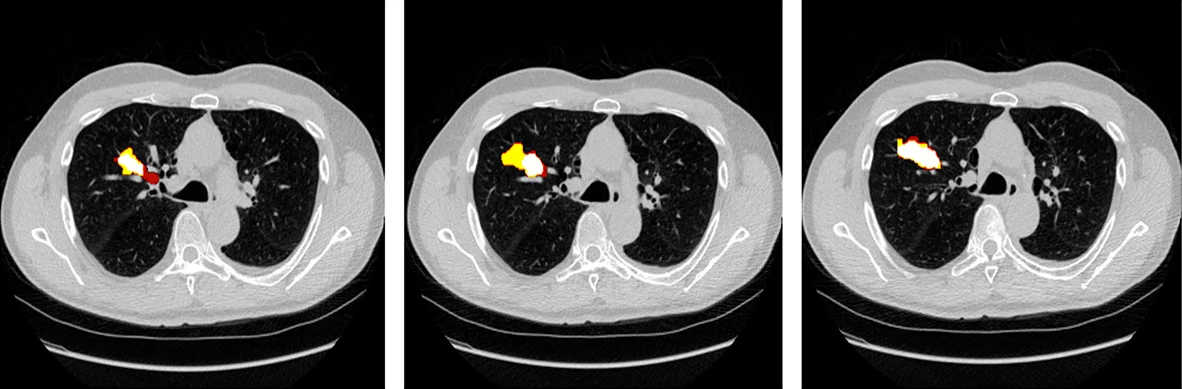
- Tumor boundaries and segmentation masks.
- Cancer type and subtype classification.
- Stage and grade annotations.
- Cellular-level labeling in pathology slides.
- Longitudinal patient outcome markers.
The Role of Medical Image Annotation for AI
Medical imaging is one of the most data-intensive areas in oncology AI.
Key Imaging Modalities Used in Oncology AI
- CT scans.
- MRI scans.
- PET scans.
- X-rays.
- Whole-slide pathology images.
To enable AI models to interpret these images accurately, they must be annotated with extreme precision.
This is where medical image annotation for AI becomes essential.
Common Annotation Techniques in Oncology
- Bounding boxes for lesion detection.
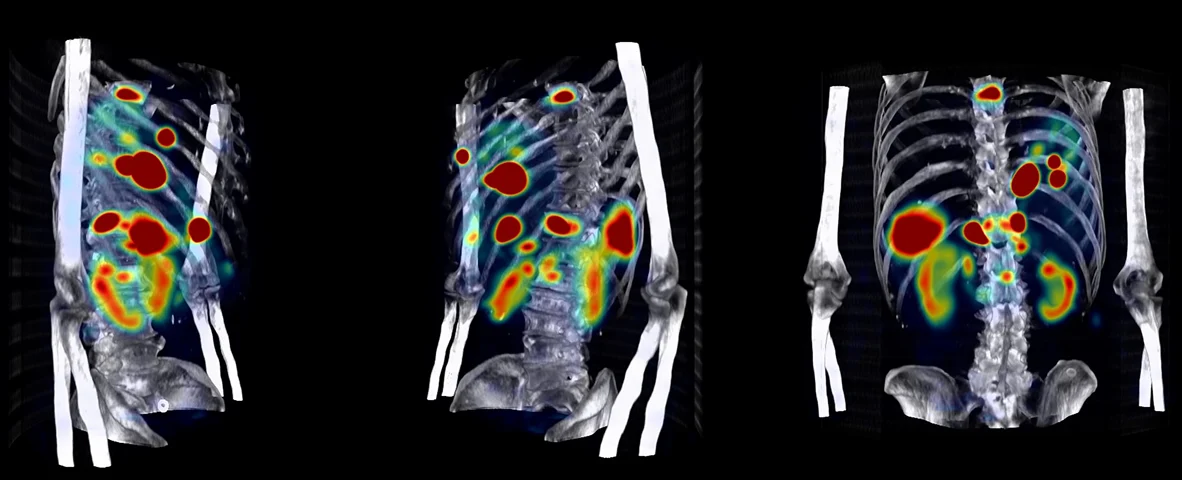
- Pixel-level segmentation for tumors.
- Polygon annotations for irregular cancer shapes.
- Landmark annotations for anatomical reference.
- Multi-class labeling for cancer subtypes.
High-quality medical image annotation ensures AI systems learn clinically relevant features rather than noise.
Oncology Data Annotation Services: Why Specialization Matters
General annotation is not enough for healthcare AI.
Oncology requires specialized data annotation services that combine technical accuracy with clinical understanding.
What Makes Oncology Data Annotation Unique?
- Complex medical terminology.
- Variability in tumor appearance.
- Need for clinical context.
- Regulatory and compliance requirements.
- Zero tolerance for annotation errors.
Professional oncology data annotation services ensure:
- Annotation guidelines aligned with clinical standards.
- Multi-layer quality assurance.
- Expert-in-the-loop validation.
- Scalable annotation pipelines for large datasets.
This level of rigor is essential for building AI systems that can be trusted in real-world clinical environments.
AI in Cancer Diagnosis: Data as the Deciding Factor
AI models trained on high-fidelity annotated data have demonstrated significant improvements in:
- Early cancer detection
- Diagnostic accuracy
- Reduction in false positives and negatives
- Faster image interpretation
Studies have shown that AI systems trained on well-annotated oncology datasets can match—and in some cases exceed—human-level performance in specific diagnostic tasks.
However, these outcomes are only possible when the underlying data is representative, accurately annotated & clinically validated This reinforces the idea that artificial intelligence in oncology is fundamentally a data-driven discipline.
How Pareidolia Systems LLP Strengthens Artificial Intelligence in Oncology?
Reliable artificial intelligence in cancer detection requires more than advanced algorithms—it requires precise, clinically meaningful data. This is where Pareidolia Systems LLP plays a critical role in enabling scalable and trustworthy oncology AI solutions.
Pareidolia Systems LLP supports healthcare AI innovators by delivering high-fidelity annotated datasets tailored specifically for oncology use cases. By combining technical annotation expertise with healthcare domain understanding, Pareidolia helps bridge the gap between raw medical data and clinically reliable AI models.
Pareidolia’s Key Contributions to Oncology AI Development
- High-precision medical image annotation for oncology, including tumor detection, segmentation, and classification
- Structured annotation workflows designed for AI in cancer diagnosis and predictive modeling
- Consistent annotation standards to support large-scale oncology dataset preparation.
- Domain expertise guiding clinically accurate annotation of cancer imaging data.
- Quality-controlled annotation pipelines to reduce noise, bias, and inconsistencies in training data
- Scalable support for AI research teams, startups, and enterprises working on oncology solutions
By focusing on data accuracy and consistency, Pareidolia Systems LLP enables AI teams to train models that perform reliably across diverse datasets and clinical scenarios.
Enabling Reliable and Interpretable Oncology AI Through High-Fidelity Data
For artificial intelligence in oncology to deliver meaningful insights, AI models must be trained on data that accurately represents real-world clinical conditions. Pareidolia Systems LLP helps ensure this by providing high-fidelity annotated data that allows AI systems to learn clinically relevant patterns rather than surface-level correlations.
Through detailed and structured annotation processes, Pareidolia empowers AI models in:
- Identifying and learning precise tumor characteristics
- Differentiating between cancer subtypes with higher confidence.
- Improving consistency across imaging modalities such as CT, MRI, and pathology slides.
- Supporting model validation and performance benchmarking.
High-quality annotation also helps AI development teams better interpret model outputs, enabling clearer visualization of detected regions and improving collaboration between data scientists and clinical experts.
Rather than treating annotation as a mechanical task, Pareidolia Systems LLP approaches it as a critical layer in the oncology AI lifecycle, ensuring that training data aligns with real diagnostic requirements and research objectives.
The Future of Artificial Intelligence in Oncology
As cancer research evolves, AI will play an even larger role in:
- Early detection programs
- Personalized oncology
- Predictive outcome modeling
- Drug discovery and clinical trials
However, the future success of AI in oncology will continue to depend on one critical factor:
The quality of annotated data used to train these systems.
Organizations that invest in high-fidelity annotation today will shape the future of reliable, ethical, and clinically impactful oncology AI.
Frequently Asked Questions (FAQs)
- What is artificial intelligence in oncology?
- Artificial intelligence in oncology refers to the use of AI technologies to assist in cancer detection, diagnosis, treatment planning, and outcome prediction.
2. Why is data annotation important in oncology AI?
- Data annotation ensures AI models learn from accurate, clinically meaningful information, improving diagnostic reliability and patient safety.
3. What is high-fidelity annotated data?
- High-fidelity annotated data is accurately annotated, clinically validated medical imaging data that meets quality and regulatory standards required for healthcare AI.
4. How does AI help in cancer diagnosis?
- AI analyzes medical images and clinical data to detect tumors, classify cancer types, and support early diagnosis.
5. What are oncology data annotation services?
- These are specialized services that label cancer-related medical data with clinical precision for training AI models.
6. Why choose a cancer dataset annotation company?
- Specialized companies provide expertise, quality assurance, scalability, and compliance required for oncology AI development.
Artificial intelligence in oncology holds immense promise—but only when built on a foundation of high-fidelity annotated data.
From AI in cancer diagnosis to advanced predictive analytics, data quality determines whether oncology AI systems are reliable, explainable, and clinically useful.
As healthcare organizations continue to adopt AI, investing in accurate medical image annotation and expert-driven data labeling is no longer optional—it is essential.