 Oct 14 2026
 Advanced 3D Medical Image Segmentation
Medical Image Annotation Services: Use Cases Across Healthcare AI
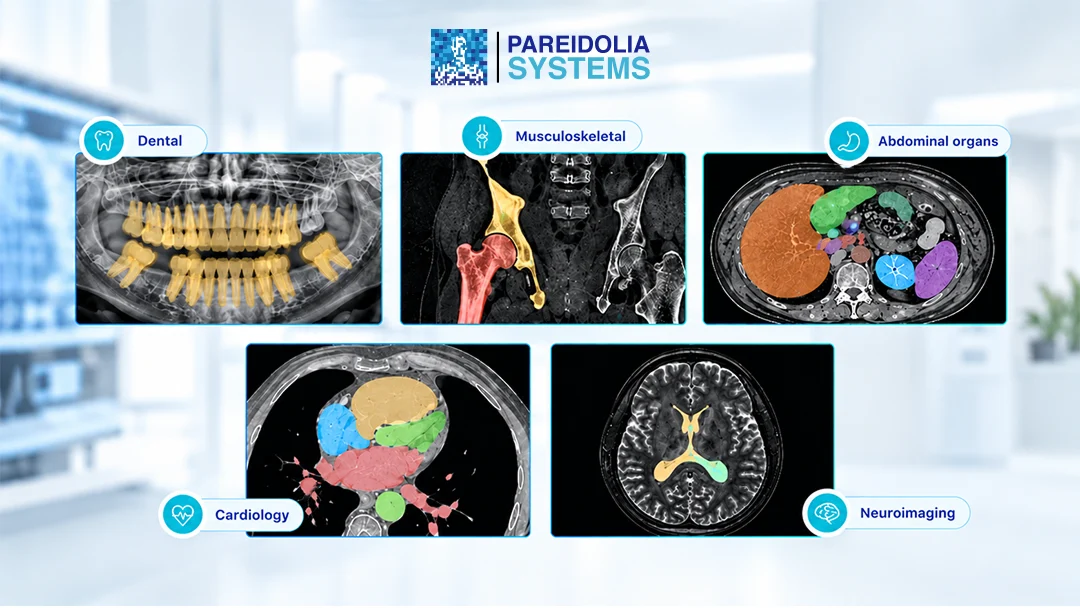
Ever wondered how a healthcare AI model spots a tiny lung nodule on a chest CT scan? Spoiler alert: it doesn’t “see” anything on its own. AI only recognizes a potential tumor or lesion if it has analyzed thousands of previous scans, each one meticulously outlined, categorized, and verified by expert radiologists and medical annotators. […]


- Sep 30 2026
- advanced imaging AI
Why Multimodal Prostate AI Needs More Than Image Labels: Annotation, Segmentation, and Clinical Data Quality
Prostate cancer diagnosis has always been a puzzle assembled from different pieces of evidence — a PSA number, an MRI sequence, a biopsy report, a pathologist’s Gleason score. No single image tells the whole story. That’s exactly why prostate AI has moved toward multimodal models: systems trained not on one scan type, but on the […]

- Sep 22 2026
- AI in Breast Cancer Imaging
Breast Ultrasound Annotation for AI: What Makes a Dataset Training-Ready?
Breast cancer remains one of the most common cancers affecting women worldwide, and early detection through imaging continues to save lives. As AI-powered diagnostic tools become more common in radiology, breast ultrasound annotation has emerged as one of the most critical — yet often overlooked — steps in building models that clinicians can actually trust. […]

- Sep 1 2026
- Advanced 3D Medical Image Segmentation
Inter Annotator Agreement in Medical Imaging Full Guide
Inter-annotator agreement is one of the most overlooked quality metrics in healthcare AI development — and one of the most important.If you’re building or sourcing medical imaging datasets for AI development, understanding inter-annotator agreement in medical imaging is essential before you trust a dataset with your model’s training. What Is Inter-Annotator Agreement? Inter-annotator agreement (IAA) […]
- Aug 14 2026
- advanced imaging AI
5 Signs Your Medical Imaging Dataset Needs a Quality Audit
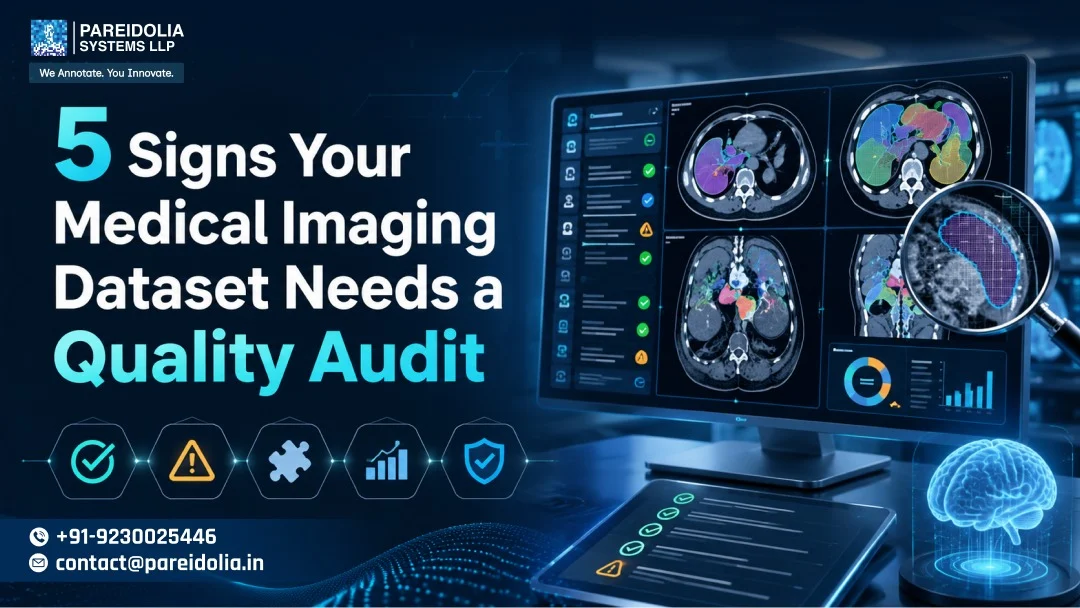
If your healthcare AI model isn’t performing the way it should, the problem probably isn’t your architecture. It’s your data. Teams spend months tuning hyperparameters, testing new model versions, and chasing marginal accuracy gains — while the real issue sits quietly underneath: an under-audited medical imaging dataset. Poor annotation doesn’t announce itself with an error […]
- Aug 1 2026
- medical image analysis
Human-in-the-Loop Annotation for Healthcare AI: Why It Still Needs a Human
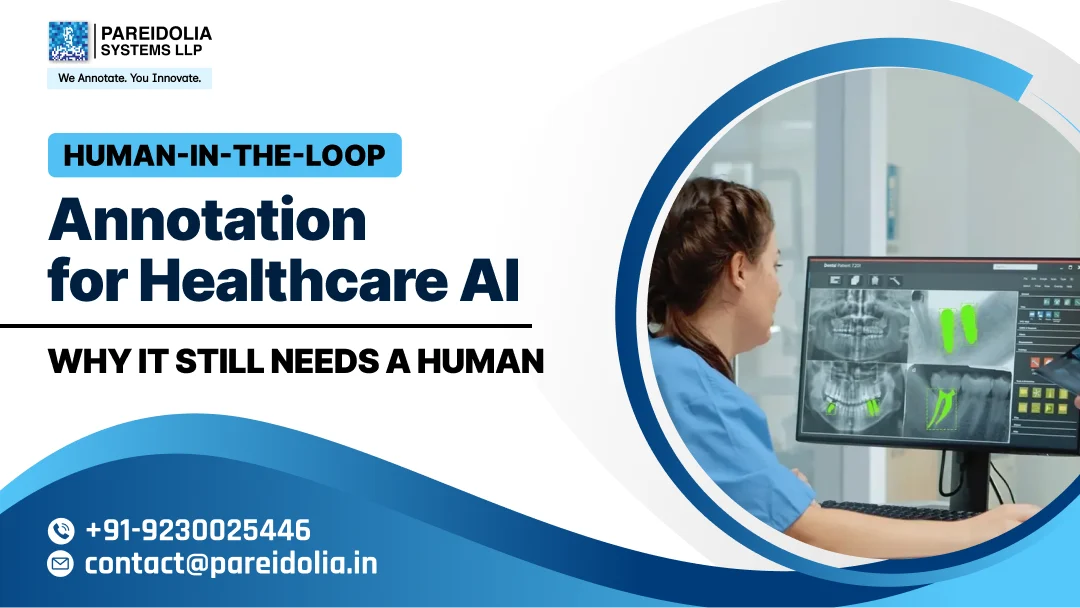
Annotation for healthcare AI is not the same task as labeling everyday photos. A bounding box around a cat is either right or wrong. A bounding box around a subtle finding on a chest X-ray depends on clinical judgment, training, and context that no labeling guideline fully captures on its own. That gap is exactly […]

- Jul 7 2026
- Advanced 3D Medical Image Segmentation
What Is the Difference Between image classification vs segmentation in Medical AI?
Why This Distinction Matters in Clinical AI? When a radiologist reviews a chest CT or a pathologist examines a histology slide, they are doing two things simultaneously: recognising what is present and localising precisely where it is. Medical AI systems replicate this process through two distinct techniques — image classification vs segmentation. Choosing the wrong […]
- Jun 25 2026
- AI MRI cancer
AI MRI Cancer Detection:Solving the Imaging Data Gap in Multimodal Oncology AI
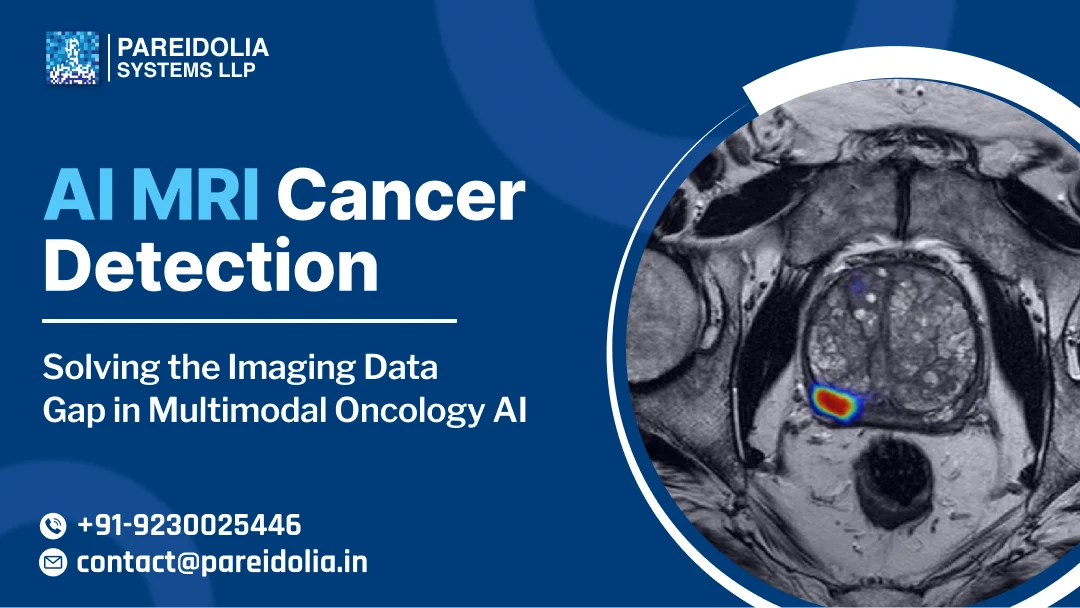
AI MRI cancer detection is one of the most actively funded and most frequently overpromised areas in oncology technology. Deep learning models for MRI-based tumor detection, response assessment, and survival prediction are proliferating in academic literature. Very few of them survive contact with clinical deployment. The reason is not algorithmic. The architecture is rarely the […]

- Jun 23 2026
- medical image analysis
Why most medical image segmentation vendors fail at QC
Medical image segmentation quality control remains one of the industry’s biggest challenges. Not a shortage of annotation vendors, there are hundreds. Not a shortage of tools; annotation platforms proliferate. The problem is systemic: most vendors treat QC as a checkbox, not a process. And in medical image segmentation, that distinction is the difference between a […]
Welcome to the Healthcare AI Blog by Pareidolia Systems LLP, your trusted source for expert insights into artificial intelligence, medical imaging, radiology, healthcare data annotation, and emerging healthcare technologies.
The healthcare industry is undergoing a significant transformation driven by artificial intelligence, machine learning, and advanced medical imaging solutions. As healthcare organizations increasingly adopt AI-powered systems, staying informed about the latest developments has become more important than ever.
At Pareidolia Systems LLP, we specialize in medical image annotation, radiology segmentation, healthcare data preparation, and AI training datasets. Through our Healthcare AI Blog, we share industry knowledge, best practices, research trends, and practical guidance to help healthcare innovators build smarter and more accurate AI solutions.
What You’ll Find on Our Healthcare AI Blog
Our blog covers topics including:
- Medical Imaging AI
- Radiology Annotation
- Healthcare Data Annotation
- Medical Image Segmentation
- Pathology AI
- Machine Learning in Healthcare
- Healthcare AI Trends
- DICOM Data Processing
- AI Training Datasets
- Healthcare Technology Innovation
We regularly publish articles designed for healthcare organizations, AI startups, medical researchers, radiologists, and technology companies looking to understand the future of healthcare AI.
At Pareidolia Systems LLP, we believe high-quality data is the foundation of successful healthcare AI systems. Through our blog, we aim to educate and support organizations developing innovative healthcare technologies that improve patient care and clinical outcomes.
Explore our latest articles and stay updated on the rapidly evolving world of healthcare artificial intelligence.